

Tune Arrangements
Pairing English dance tunes is a bit of an art — it’s about flow, key, rhythm, and energy so dancers feel the music move naturally from one tune to the next. Here’s how experienced band leaders and arrangers usually approach it
1. Match Dance Type and Rhythm
Keep tunes within the same dance form — e.g. reels with reels, jigs with jigs, polkas with polkas.
Ensure the beat feel stays consistent. A reel in 4/4 should lead smoothly into another reel with a similar drive.
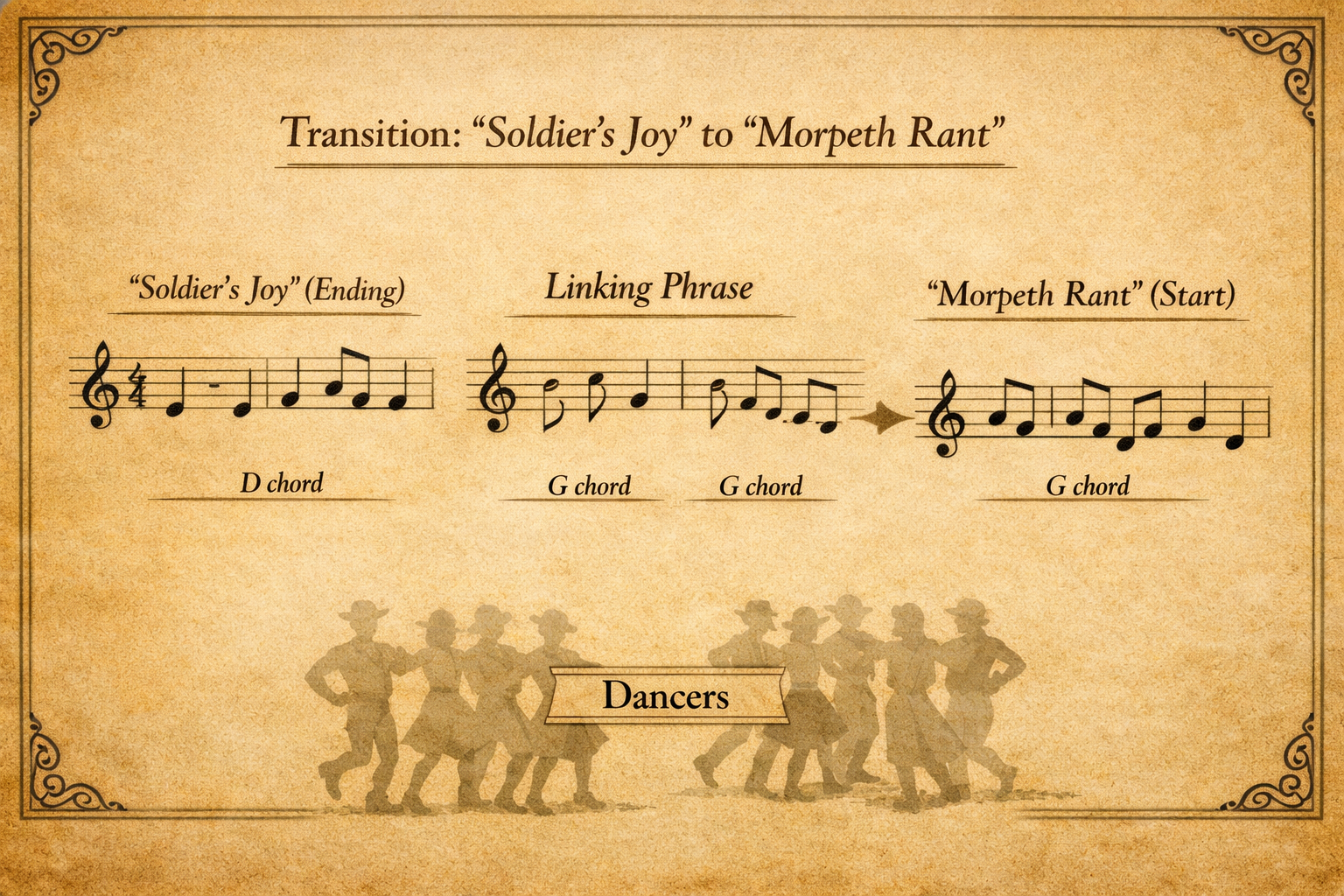
2. Consider Key Relationships
-
Moving between keys adds colour without breaking flow.
-
Common pairings: D → G → A or G → D → A.
-
Avoid abrupt jumps (like D major to F minor) unless you want a dramatic lift.
-
-
Some bands modulate upward for excitement near the end of a dance — e.g. finishing a set one tone higher.
3. Energy and Character
-
Start with a steady, clear tune dancers can lock into.
-
Follow with something livelier or more rhythmically intricate to build energy.
-
End with a strong, punchy tune that feels like a finale — often one with clear phrasing and a satisfying cadence
- Going from major to minor and then back to major can help give move entry to both the music and dances
4. Tune Length and Structure
-
Most English dance tunes are 32 bars (AABB).
-
A typical set might be three tunes, each repeated several times (e.g. 3×AABB per tune).
-
The leader signals changes so dancers stay in sync.