

Crafting the perfect sound: Best band layouts
Discover how thoughtful band layouts can elevate your music performance. This guide explores effective arrangements that ensure harmony, clarity, and an exceptional experience for both musicians and audience.

Understanding effective band configurations
When playing traditional music, especially for dances, the physical arrangement of your band can significantly impact your sound and cohesion. This page will guide you through practical layouts designed to enhance your performance. We'll focus on how different instruments work together and where musicians stand to achieve the best auditory results.
Layout One: Front and Centre
This layout is particularly effective for larger bands, ensuring everyone stays in sync. The band leader stands front and centre. Instruments that play both tune and rhythm, such as an accordion, are positioned on the far right. This allows the leader to clearly hear the tune. Other tune players are placed behind and in between on the right. Rhythm players, including bass, guitar, and drums, are situated to the left of the leader. This setup promotes clear communication and a cohesive sound, making it ideal for bigger ensembles.

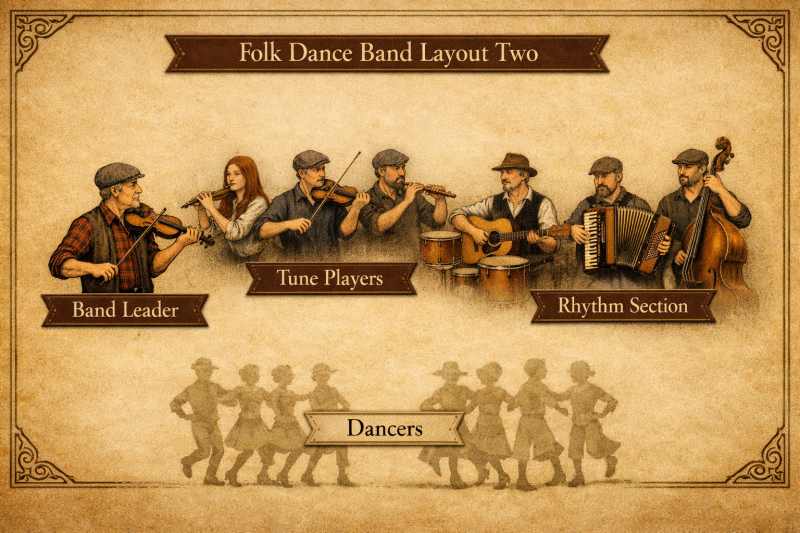
Layout Two: Curved
For bands with up to about 10 players, the curved arrangement works exceptionally well. Here, the leader is positioned on one side at the front, with the other band members curving around. Tune players are next to the leader, gradually transitioning to rhythm players on the far side. This layout ensures everyone can clearly see the leader, which is crucial for maintaining timing. Even in smaller bands, flexibility is key. For example, in a four-piece band, the guitar might be in the middle if they can't hear the leader over a strong melodeon player. Experimenting with your standing positions is encouraged for smaller, more regular bands, but for ad hoc larger groups, layouts like this provide a reliable structure.
Why effective layouts matter
The primary goal of these layouts is to ensure that different types of players are grouped together—rhythm with rhythm, and tune players with other tune players. This strategic grouping helps everyone stay in time with each other and the leader, significantly improving the overall sound of the band. A well-considered layout not only enhances the listening experience for the audience but also ensures internal cohesion. If musicians are randomly placed, the band's sound will reflect that disorganisation. A good layout ensures a harmonious and professional performance, making it a critical aspect of any successful traditional music band.